
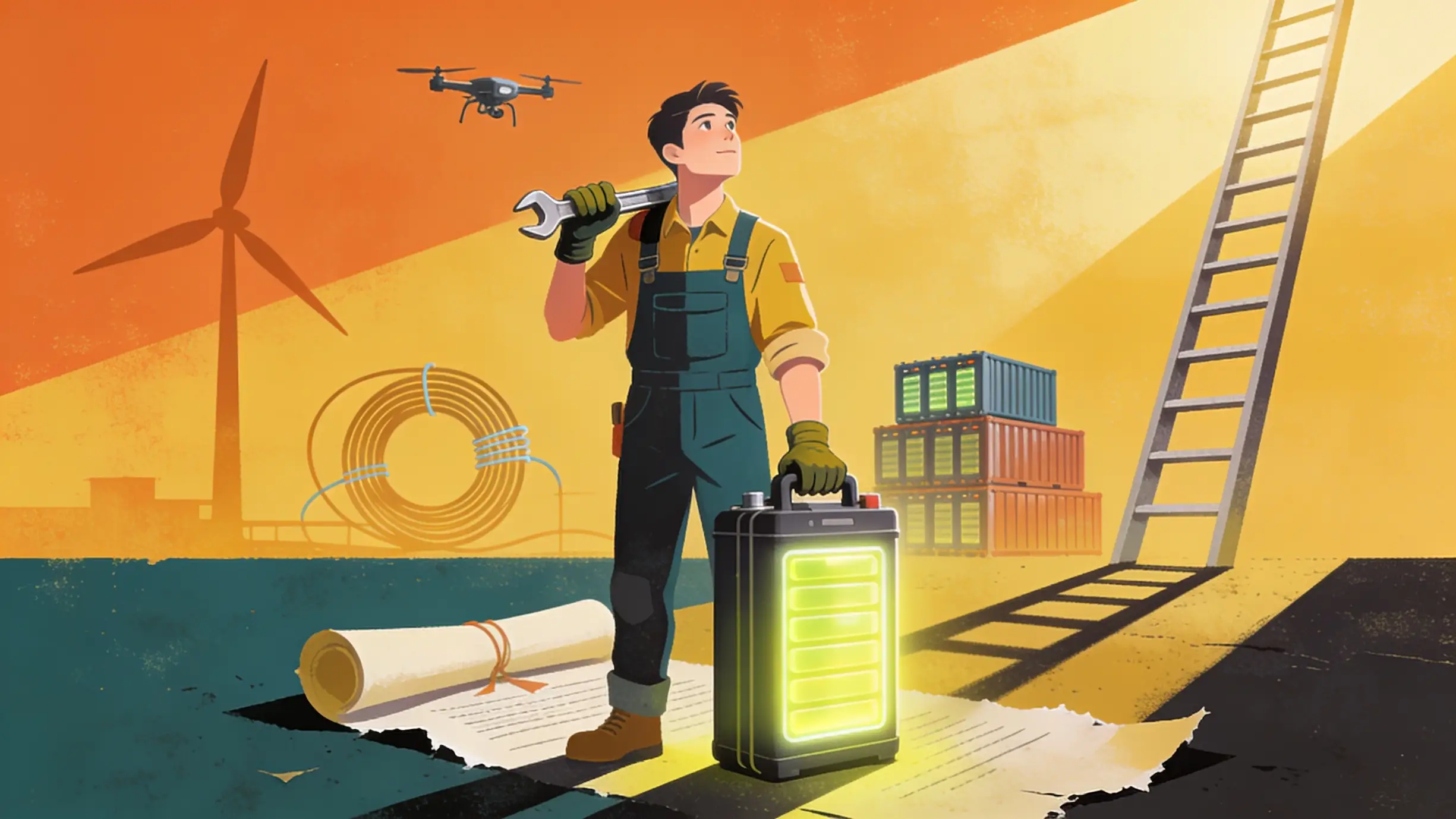
Right now, some of the highest paying careers don’t even require a 4-year degree. They just require a specific set of skills. The people who are willing to go out and learn those skills are going to be the ones winning. You’ve probably heard the usual advice of plumbing, electrician, all solid paths. But nobody’s really talking about the newer trade jobs being created right now by major tech shifts. These are jobs that didn’t exist just 5 years ago, and companies are paying people from scratch, sometimes up to six figures, without a four-year degree.
Data Center Critical Facilities Technician
The world is building data centers at a massive scale right now. This is an entire infrastructure boom being driven by AI. Every time you use AI, stream Netflix, or scroll on your phone, that data is stored in physical buildings full of servers. Those buildings require constant power, cooling, and monitoring to stay online. That’s where this first role comes in: the data center critical facilities technician. Most people don’t even realize this career exists.
Why Data Center Jobs Are In High Demand
Right now, companies like Amazon, Microsoft, and Google are pouring hundreds of billions into building out AI infrastructure. They don’t have enough people to actually run these facilities. Recent industry data suggests over 60% of data center operators say finding skilled workers is their biggest challenge, and job postings for roles like electrical technicians and power-related positions have reportedly surged by over 180% in some cases in just the past few years. This is not a saturated space, this is a shortage. These jobs are hands-on: managing power systems, cooling systems, backup generators, the physical infrastructure that keeps the internet running.
Pay for Data Center Technicians
Entry-level roles can start at around 45,000 to 60,000. Once you gain experience, it’s common to see 80,000 to 110,000 and even higher at major tech companies. In certain areas where AI data centers are booming, skilled workers are already earning above-average wages due to demand.
Certifications and Training
Most people start with basic certifications like CompTIA A+ or Network+. What really matters in 2026 is understanding power and cooling systems. That means HVAC certifications like EPA 608, electrical or mechanical training, or data center specific certifications like CDCP. With AI systems generating massive amounts of heat, cooling is becoming one of the most critical skills in the entire industry. Realistically, you can get job ready in about 3 to 6 months depending on how fast you move.
You don’t always have to pay for this training. Some free training programs cover certifications like CompTIA A+ and OSHA. Microsoft also has a data center academy that partners with community colleges to train people specifically for these roles. This is one of those rare opportunities where you don’t need a degree, you don’t need a huge upfront investment, and you’re stepping into an industry that’s being built in real time. With AI pushing this growth even faster, demand for people who can actually run these facilities is only going to increase.
Companies Hiring
Companies hiring right now for this position include Google, Microsoft, Amazon Web Services, Equinix, Digital Realty, and QTS.
Career Coaching With Strawberry.me
Learning a new trade is one of the best moves you can make for your career. Knowing what to do is only half the equation. That’s why I’m partnering with today’s sponsor, Strawberry.me. Strawberry matches you with a certified career coach who helps you build a real, personalized strategy for your career, not just generic advice, built around your specific goals.
I had a session for myself about my YouTube journey and how to continue pivoting this channel. My coach was extremely helpful in breaking down my own vision. Showing me ways to work through my own hurdles with this business. She was patient, encouraged me to talk through my thoughts and goals out loud. Reflected back what she was hearing from that third-party perspective.
A third-party perspective can really help you understand your own goals and direction. I understand the struggle of feeling stagnant in your job, being overlooked for promotions you feel you deserve, or even searching for the right job altogether. Strawberry is virtual, flexible, and more affordable than most people expect. Right now you can get 50% off your first coaching session at strawberry.me/financiallypowerful.
Battery Energy Storage System (BESS) Technician
This one is called a battery energy storage system technician, or BESS technician, and most people still aren’t paying attention to it yet, but it’s growing fast. The easiest way to understand this job is to picture massive shipping containers filled with lithium-ion batteries sitting next to solar and wind farms. Their job is to store energy and release it when the grid actually needs it, because solar and wind don’t run 24/7. Without storage, the grid becomes unstable. That’s where this role comes in.
What a BESS Technician Does
A BESS technician installs, maintains, and troubleshoots these systems, everything from electrical components to battery management systems, cooling systems, and safety protocols.
Growth in Battery Storage
The US Energy Information Administration expects battery storage in the US to grow from about 17 gigawatts in 2023 to over 40 gigawatts within a few years, more than doubling in a short span. This means the workforce to support it has to grow too. Companies like NextEra Energy and Terra-Gen are already hiring for these roles. Most BESS technician positions reportedly pay between around 80,000 and 120,000 per year, with higher earning potential in senior or travel-based roles.
Certification and Training
You don’t need a 4-year degree to get into this. If you already have an electrical or HVAC background, a lot of your skills transfer directly. If you’re starting from zero, one of the most recognized certifications is the NABCEP energy storage credential. That path usually costs around $2,000 to $3,000 total, including training and OSHA certification. A lot of people also get in through apprenticeships or utility companies where you can get trained on the job.
Electric Vehicle Charging Station Technician
This one is directly tied to something you see every single day: electric vehicles. More EVs are hitting the road every year, and all of them need somewhere to charge. But the infrastructure hasn’t fully caught up yet, and that’s growing demand for people who specifically know how to install, maintain, and troubleshoot EV charging stations. This isn’t just basic electrical work either. These systems involve high-voltage power, networking connections, software diagnostics, and communication with the grid. Companies are starting to look for specialists, not just general electricians.
Growing Demand for EV Chargers
The scale of this opportunity is significant. According to the US Department of Transportation, the US is working toward building 500,000 public EV chargers by 2030, backed by $5 billion in federal funding through the National Electric Vehicle Infrastructure Program, which means thousands of installations and ongoing maintenance for years. Companies like Rivian, ChargerHelp!, ABM Industries, and Highland Electric are already hiring for these roles right now.
Pay
Entry-level roles typically start at around 50,000 to 70,000 per year. With experience, many technicians move into the 80,000 to 100,000 range and higher if they’re traveling or working on larger scale projects.
EVITP Certification
If you’re already a licensed electrician, you can specialize pretty quickly. One of the most recognized certifications is the EVITP, the Electric Vehicle Infrastructure Training Program. It costs around $275, takes about 20 hours, and adds a highly in-demand skill set to what you already know. This is typically for electricians or people with electrical experience.
Robotics and Automation Technician
Our next one is the robotics and automation technician. Companies are automating many Amazon warehouses, automotive plants, and food processing facilities, and these robots don’t maintain themselves. Someone has to install them, troubleshoot them, and keep the production lines running. A robotics and automation technician works on industrial robots and PLC systems, the computers that control machines, sensors, and automated systems that keep operations moving. This is a mix of mechanical work, electrical knowledge, and basic programming.
Growth in Industrial Automation
According to the International Federation of Robotics, global installations of industrial robots reportedly reached over 500,000 units in a single year, showing continued rapid growth as companies automate their operations. Labor shortages, rising costs, and companies bringing more production back to the US are driving this, which means they need people who know how to run and maintain these systems. Companies like Tesla, Amazon, and major manufacturing firms are hiring for these roles right now.
Pay
Many positions fall into the 70,000 to 95,000 range. With experience or specialization, that can move into six figures, especially in advanced manufacturing or robotics-heavy environments.
Certification and Training Paths
The barrier to entry is also lower than most people think.An associate’s degree in mechatronics or industrial automation can get you into many of these roles, typically costing between 5,000 and 15,000 at a community college. There are also faster paths: if you’re already in a mechanical or electrical trade, you can cross-train by learning PLC programming and automation systems. There are affordable online courses to get started with, but hands-on experience is what really makes you valuable. You can get certified through manufacturers like Fanuc or ABB, or enter through paid apprenticeship programs. Amazon, for example, offers a mechatronics and robotics apprenticeship where you get paid while learning these exact skills.
Fiber Optic Splicing Technician
This one is often overlooked, but it’s becoming one of the most important trades in the country right now: fiber optic splicing. This isn’t old-school telecom work anymore, it’s critical infrastructure, because three major things are driving fiber demand: data centers powering AI and cloud computing, massive broadband expansion across the country, and the infrastructure behind the 5G network. All of that runs on fiber, and someone has to physically install it, connect it, and fix it when it breaks.
What a Fiber Optic Splicer Does
A fiber optic splicer uses precision equipment to fuse fiber lines together and then tests those connections using tools like the OTDR, which can detect a break in a line from miles away. According to the National Telecommunications and Information Administration, the US government has committed $42.5 billion through the BEAD program to expand broadband access nationwide. This means thousands of miles of fiber still need to be installed and maintained, which is why skilled splicers are in high demand.
Pay
Many roles fall between about 60,000 and 90,000 per year. With experience, especially on large projects or traveling roles, that can move well into six figures.
Certification
One of the biggest advantages of this path is how fast you can get started. The industry standard certification is the Certified Fiber Optic Technician through the Fiber Optic Association. It typically takes about 3 to 5 days to complete and costs around $1,000 to $1,500. You don’t need a degree or prior experience, and if you already have field experience, you may be able to test out at a lower cost.
UAV Drone Technician
The last one on this list is the UAV drone technician. Real industries use these drones for infrastructure inspection, agriculture, construction, search and rescue, and even delivery not just hobbyists. Utility companies use them to inspect power lines. Construction companies use them to survey job sites. Farmers use them for crop monitoring and precision spraying. All of those drones need people who know how to operate them, maintain them, and troubleshoot issues when something goes wrong.
Industries Using Commercial Drones
The Federal Aviation Administration (FAA) has already registered over 850,000 drones in the United States and approved hundreds of thousands for commercial use. That number continues to grow year over year, which means more equipment in the field and more demand for skilled operators and technicians.
Pay
Many commercial drone operators start in the $40,000 to $70,000 range. With experience or specialization like infrastructure inspection or mapping, that can move into the 80,000 to 100,000-plus range. In defense or highly technical roles, it can go even higher.
FAA Part 107 Certification
This is one of the lowest cost entry points on this entire list. To legally operate drones commercially, you need the FAA Part 107 remote pilot certificate. That exam costs around $175, and a prep course is usually around 100 to 150 dollars, or you can self-study using free FAA materials. You can realistically get certified for around 300 dollars. Most people will also invest in a drone and basic insurance, depending on the type of work they want to do. If you want to move into higher paying maintenance or repair roles, there’s a more advanced path through FAA Airframe and Powerplant certification, used across aviation and defense. This is a field expanding alongside technology: more drones, more use cases, and more industries relying on them every year.
Closing Thoughts
These aren’t just trends that are going away, they’re accelerating, and the trades are where the rubber meets the road, because AI can’t install a cooling system in a data center. A robot can’t splice fiber optic cable 30 feet underground. Software can’t maintain a grid-scale battery system in the desert. According to industry workforce estimates, nearly one third of America’s skilled workforce is over 50 and heading toward retirement, and the US faces a potential shortfall of 1.9 million manufacturing workers by 2033. That means wages are going up, not down.