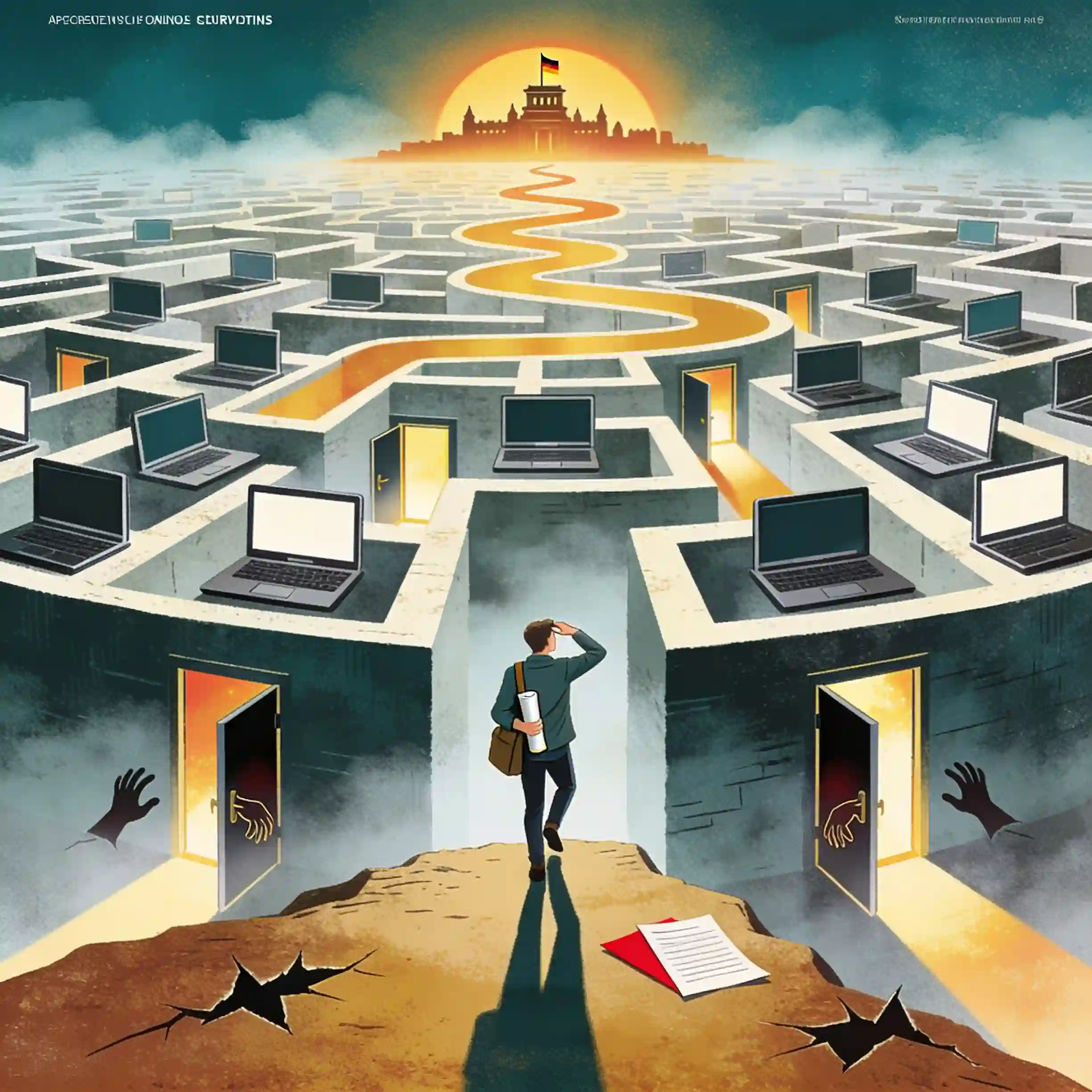

IT jobs in Germany are known for paying above average salaries, and it’s a very popular field to get into. Many of you might be wondering how you can get this kind of job, what the requirements are, and how much salary you can expect.
Requirements for IT jobs
First of all, what requirements do you need to fulfill to get an IT job in Germany? There are multiple ways to do this. The beautiful thing in tech is that as long as you have the required skills and you can prove it, you’ll have a good chance to get a job. It definitely helps if you can speak German, but you don’t have to go to a prestigious top ranked university and get a fancy degree to land a high-paying tech job. IT is one of the only fields where you can technically get a job straight after high school. One of my family members actually got a well-paid offer at an IT company straight out of high school, before even starting university. Keep in mind this is far from normal, but it shows how different the IT field can be compared to others.
Degree requirements
Most tech roles in Germany expect you to have at least a bachelor’s degree in fields like computer science, software engineering, or something related. A master’s degree usually isn’t necessary, and a lot of students start working right after their bachelor’s. I’d say a master’s only really makes sense if you want to specialize deeply in one area. The nice thing about computer science is that it doesn’t matter too much which university you attend. Going to a university of applied sciences can actually be an advantage here, since you tend to learn more practical skills, maybe through an internship or project-based work. Having certificates in specific tools or platforms can also boost your profile, and online courses or boot camps can make a difference too.
Vocational training
When it comes to IT, there’s also the option to do vocational training to get into the field, and this is called an Ausbildung. In short, an Ausbildung is a hands-on program where you split your time between classroom study and working at a company. You get paid a small salary while gaining experience at the same time.

Job Roles in IT
So what jobs can you actually get? With a computer science degree or an Ausbildung, Germany’s IT industry offers a ton of career paths. Probably the most in-demand and classic one is software developer. Beyond that there are roles like data scientists and analysts, system administrators, cybersecurity specialists, machine learning engineers, product managers, and IT consultants. These positions often pay above average salaries.
Top Companies Hiring in IT
The cool thing about computer science is that you can move into a bunch of different industries after graduating. Automotive, banking, fintech, health, AI, they all need IT people, so employability after graduation tends to be pretty high. A natural question is which companies are the major players in computer science in Germany. Over the last year I’ve talked to a lot of people in this industry and put together a list of companies known for paying good salaries and offering good benefits.
Big tech and German multinationals
You’ve got the usual big tech names that are famous worldwide as great places to work, and in Germany that includes Google, Microsoft, Amazon, and Apple, all of which have offices in major cities. German multinationals like SAP, Siemens, BMW, and Bosch are also top employers.
Automotive, consulting, and startups
The automotive industry is another hotspot for IT roles, with companies like BMW, Mercedes-Benz, and Volkswagen Group all needing IT people. If you want to go into IT consulting, companies like Accenture, Capgemini, and Deloitte Digital offer big opportunities. If startups and scaleups are more your thing, there’s Celonis, N26, and Trade Republic, just to name a few. And if research is your focus, there’s the well-known Fraunhofer Institute and the Max Planck Society.
Working Abroad and the German Language
Let’s say at some point you’re ready to move on from working in Germany. IT is flexible enough that you can take your German experience and find work in other countries too. That said, in most companies here, even the big ones, you’ll need to speak at least some level of German. English-only IT jobs do exist, but honestly they’re pretty rare. If you want to widen your options, learning even the basics of German helps a lot.
Work-Life Balance in Germany
IT is known for its good work-life balance, and combined with the generally relaxed German work culture, that’s a big win for a lot of people. IT jobs typically run a 35 to 40 hour work week, and remote work has become pretty common here too. You also get a solid amount of paid vacation, usually around 30 days a year. If work-life balance matters to you, an IT job in Germany is hard to beat.
IT Salaries in Germany
How much you earn in IT depends on factors like experience, skills, and location. From what I’ve seen, entry-level roles typically start somewhere between 45,000 and 55,000 euros a year. In more expensive cities like Munich, I’ve seen fresh graduates start closer to 60K, which already puts them well above the national average. With a bit of experience, that can climb to somewhere in the 60K to 80K range, though it varies a lot depending on the specific role.
Degree vs vocational training salary gap
One interesting data point comes from the StepStone job report for 2025, which found that people with a university degree tend to earn around 67,000 euros, compared to about 53,000 euros without one. That gap between vocational training and a university degree is pretty noticeable.
Company size and industry impact on salary
Company size also plays a role, with larger companies (over 5,000 employees) generally offering the highest salaries according to that same report. The industry matters too. High-demand fields like finance, automotive, or pharmaceuticals tend to pay more because they need more specialized skills. IT jobs at nonprofits, in education, or at smaller startups might pay less, but that doesn’t mean the work is any less worthwhile. Those roles can offer meaningful projects or a chance to work in innovative niche areas. It really comes down to finding the right balance between what you value and what fits your career goals.
Strategy to Land a Tech Job in Germany
All of this sounds great, but landing a tech job in Germany takes a real strategy. Platforms like LinkedIn, StepStone, and Glassdoor are solid starting points for getting a feel for the market, but you shouldn’t stop there.
Networking and internships
The real opportunities in tech, whether for an internship or a full-time role, tend to come from networking. It’s something a lot of people underestimate. So many openings never even make it onto the big platforms. If you’re just starting out, internships and working student positions are a great way into the industry, since many companies end up hiring their interns full-time once the internship wraps up.
Insider advice for students
Here’s some advice that professors and companies don’t always spell out for students: if you’re doing a bachelor’s or master’s in Germany, make sure to build an internship into your studies, or find a part-time job related to your field. This approach has by far the highest success rate for landing a full-time position after graduation.
Challenges in Germany’s Tech Job Market
Germany’s tech job market has plenty of opportunities, but also real competition. In big cities like Berlin and Munich, things can get intense since both local and international talent are chasing the same top jobs. Companies like Google, Infineon, and Microsoft in Munich, for example, are especially popular, and depending on economic conditions there may be more or fewer openings at any given time. It’s worth checking the current market sentiment before you dive in.
Will AI replace IT jobs?
A lot of people worry AI will take over tech jobs in the near future. Nobody really knows what’s coming, but from what I’ve seen with friends in cybersecurity, for instance, it’s hard to imagine AI replacing people in that field anytime soon. The job is about a lot more than plain coding. You still need people with deep knowledge, critical thinking, strategy, and hands-on execution. That said, like in any industry, staying current with your skills matters more than ever.